The Take
I've been auditing AI answers for a while now.
I've found wrong statistics, invented sources, misattributed quotes, and dates that were off by a year. I've found confident summaries that missed the one caveat that mattered. I've found citations that resolved to a real article with a different title and different authors.
And I've noticed something.
The errors that scare me most aren't the ones that look wrong. They're the ones that look right.
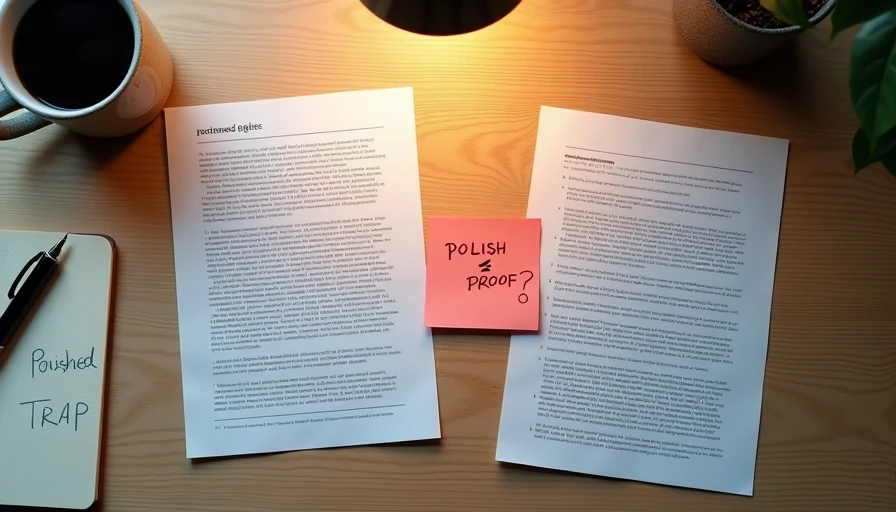
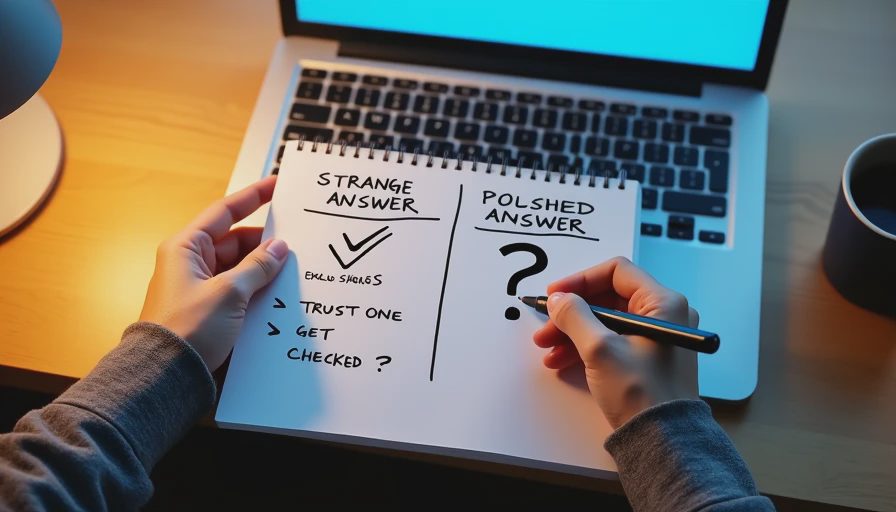
A strange answer makes me suspicious. A polished answer makes me trust.
That's backwards. And I think it's the single biggest risk in how people use AI.
What I Mean by "Polished"
Let me define what I mean.
A polished AI answer has:
Clean formatting
Proper headings
Specific numbers
Named sources
Dates and author names
A confident tone
No obvious errors
A strange AI answer has:
Odd phrasing
Vague claims
No specific sources
A confusing structure
Something that feels off
Most people trust the first one. Most people check the second one.
But the first one is where the dangerous errors hide.
Why Polished Is More Dangerous
Here's my reasoning.
Polished answers bypass my skepticism. When something looks clean, I assume it's correct. I don't check as carefully. I don't question the source. I don't wonder if the number is real.
Polished answers look like work. A clean citation with a DOI and a journal name looks like research. It looks like the AI did the work. It looks like someone verified it.
Polished answers match my expectations. If I ask for a statistic and get a number with a source, that matches what I expect. Nothing feels wrong. Nothing prompts me to check.
Polished answers are harder to verify quickly. A vague claim is easy to dismiss. A specific claim with a citation requires me to actually check the citation. That takes time.
Polished answers spread faster. If I share a polished answer, people trust it. If I share a strange answer, people ask questions. The polished error travels farther.
A Real Example
I tested this.
I asked AI for four citations on remote work productivity. The AI returned four citations with authors, years, journals, and DOIs. They all looked legitimate.
Two were real. Two were fabricated.
One of the fabricated citations had a real DOI that resolved to a different article. The DOI was formatted correctly. The journal was real. The authors were real. The article was invented.
If the AI had given me a vague answer—"several studies show remote work increases productivity"—I would have asked for sources. I would have looked for the studies myself. I would have found the real ones.
But the AI gave me a polished answer. I almost trusted it. I almost copied those citations into a draft.
The polish was the trap.
The Counterargument
I've heard this argument against my take.
"A strange answer is more dangerous because it might be partially correct. You might dismiss the whole thing and miss the part that's true."
That's fair. A strange answer can also mislead. But I think it misleads less.
Here's why. A strange answer prompts me to check. A polished answer doesn't. The strange answer is more likely to be questioned. The polished answer is more likely to be trusted.
The risk isn't which one is worse. The risk is which one gets checked less.
What I've Noticed
Since I started auditing, a few patterns have emerged.
The most confident answers are often the least verified. The AI doesn't know when it's wrong. It sounds confident regardless. Confidence is not a signal.
Polished formatting is easy to fake. The AI can format a citation perfectly while inventing the content. The format is not evidence of accuracy.
Sourced answers still need source checks. A citation isn't proof. It's a pointer. If the pointer leads to a fake, the citation is worse than no citation—because it looks like evidence.
The errors that matter most are the ones that look cleanest. Wrong names, wrong numbers, wrong dates—they're all hidden in otherwise accurate content.
The Risk
Here's the risk I see.
If polished AI answers are trusted more than strange ones, then the most dangerous AI errors are the ones that look the best. The AI gets better at formatting. It gets better at sounding confident. It gets better at producing clean-looking citations. And the more polished the output, the less likely it is to be checked.
This is a growing risk. Not because AI is getting worse. Because AI is getting better at looking right.
What I'm Asking the Community
Am I wrong about this?
Here's what I'd like to know.
Have you been burned by a polished answer? Not a strange one. A clean one. One that looked right and turned out to be wrong.
Do you check polished answers more or less carefully? Honest answers only. I know I check them less. I'm wondering if I'm alone.
Is there a way to make polished answers feel less trustworthy? Some kind of prompt, or checklist, or habit that counteracts the polish effect?
Should the forum track this pattern? Maybe a specific tag for "polished but wrong" cases. Or a specific section on the error patterns board.
What would change your mind? If you think strange answers are more dangerous, tell me why. If you think polished answers are fine, tell me why. I'd rather be corrected than confirm my bias.
And one more question. Is there a training habit that helps? Something I can practice that makes me check polished answers the way I check strange ones?
I'm trying to build a habit that doesn't depend on whether the answer looks right. I'd rather trust a process than trust the surface.
A Few More Details
I should mention: I'm not saying strange answers are safe. They're not. They contain errors too. But I think they get checked more often, which makes them less dangerous in practice.
I should also mention: I'm not saying AI is bad. I use it every day. I'm saying the polish is the risk, not the tool.
If you've done an audit that contradicts this take, I'd love to see it. If you've done one that confirms it, I'd love to see that too. I'm not trying to be right. I'm trying to build a better habit.
Comments
No comments yet — be the first to share a thought.