The Take
I've read a lot of AI fact-checking advice.
Most of it follows the same pattern. You ask the AI a question. You get an answer. Then you check the answer. Look for sources. Verify the numbers. Trace the citations. Confirm the dates.
That's good advice. I use it. It catches errors.
But I think it starts too late.
By the time the answer arrives, the damage is partly done. You've already anchored on the AI's framing. You've already accepted its structure. You've already started thinking inside the box it built for you.
I think verification should begin before you type the first prompt. Before the answer exists. Before you've handed the AI control of the question.
That's my hot take. Let me explain why.
Why Most Advice Starts Too Late
Most fact-checking advice treats the AI answer as the starting point.
"Ask the AI. Then check the answer."
That works if the AI answer is roughly correct and you're just hunting for errors. It fails when the AI answer is wrong in a way that shapes your thinking before you notice.
Here's what I mean.
If I ask "What are the main causes of X?" the AI gives me a list. I then check each item. But the list itself might be wrong. It might be missing the most important cause. It might include a cause that isn't real. It might frame the whole question in a way that's misleading.
Checking the items doesn't catch a wrong frame.
If I ask "Is it true that Y causes Z?" the AI might say yes. I then check the claim. But I never asked whether the question was well-formed. I never asked whether Y and Z are even related. I accepted the frame and checked inside it.
The frame is the problem. The frame is set before the answer. So the check has to start there too.
What "Before the Prompt" Looks Like
Here's what I mean by verification before the prompt.
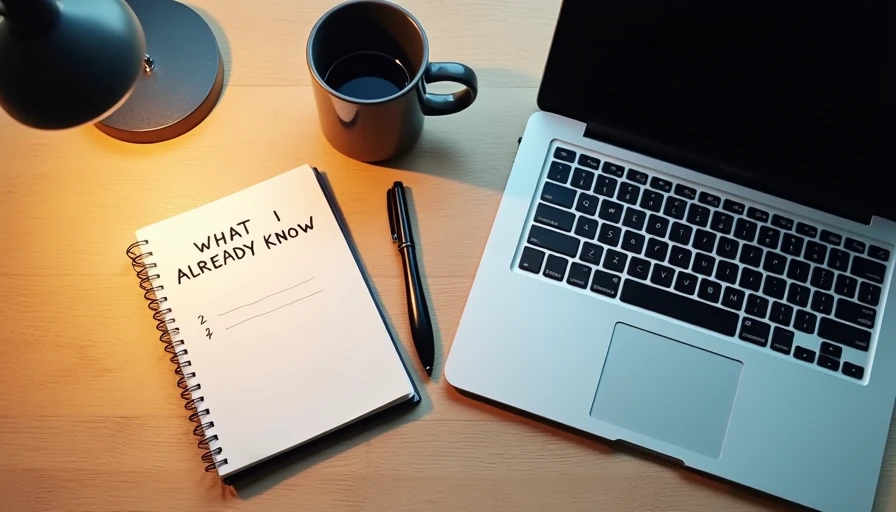
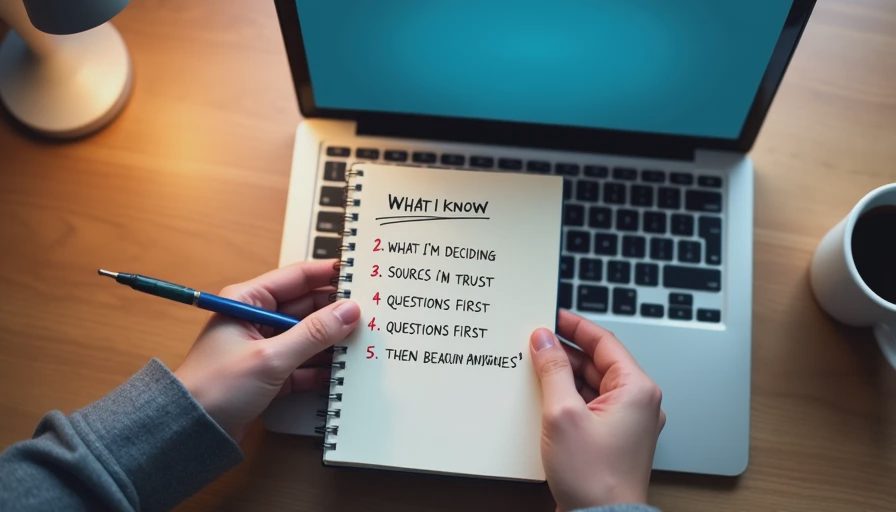
1. Write down what I already know. Before I ask the AI anything, I write a few sentences about what I think I know. Not because I'm always right. Because I want a record of my prior assumptions. If the AI changes my mind, I want to know it changed my mind.
2. Write down what I'm actually trying to decide. Am I trying to decide a fact? A recommendation? A course of action? The type of decision changes the type of verification I need.
3. Write down the sources I trust. Before the AI gives me sources, I list the sources I'd trust if I found them myself. Government sites. Peer-reviewed journals. Primary documents. Named experts. That list becomes my benchmark.
4. Ask the AI for a list of questions, not answers. Instead of "What is X?" I ask "What questions should I ask about X?" That gives me a frame to verify before I get any content.
5. Then ask for the answer. By this point, I have a prior. I have a decision type. I have a trust list. I have a frame. When the answer arrives, I'm not starting from zero. I'm checking against something I built first.
That's what "before the prompt" means. It's not about distrusting the AI. It's about not outsourcing the frame.
The Counterargument
I've heard this argument against my take.
"Most people don't have time for all that. They just want an answer."
That's fair. Most people don't. I don't, either. The five steps above take about five minutes total. But not every question needs them.
Here's my response. The steps scale. For a low-stakes question, I skip steps. For a high-stakes question, I don't. The point isn't that everyone should do all five steps every time. The point is that the first verification step should happen before the answer, not after.
Even thirty seconds of "what do I already think I know?" changes how I read the answer.
What I've Noticed
Since I started doing this, a few things have changed.
I notice wrong frames faster. When the AI answer doesn't match my prior, I check why. Sometimes my prior was wrong. Sometimes the AI was. Either way, I notice.
I ask better questions. Instead of asking "is X true?" I ask "what would have to be true for X to be true?" The AI gives me a checklist. I verify the checklist before the answer.
I use the AI less for opinions. When I've written down what I already know, I use the AI more for facts and structure. Less for "what should I think?"
I catch more errors. This is anecdotal. I don't have numbers. But I catch errors earlier—sometimes before the answer is even finished—because I'm comparing against something I built first.
The Risk
If I'm wrong about this, the risk is time.
Verification before the prompt takes longer than verification after. If the AI was going to give a correct answer anyway, I've added time for no benefit. For some tasks, that's a waste.
But for high-stakes tasks, the time is small. And the cost of a wrong frame—a wrong answer that I never questioned because I never had a frame to question it against—is higher.
The Take, Restated
Most AI fact-checking advice says: ask, then check.
I think it should say: prepare, ask, then check.
The preparation is cheap. It takes a few minutes. It changes what you notice.
Verification doesn't start when the answer arrives. It starts when you decide what to ask.
What I'm Asking the Community
Am I wrong about this?
If you already do something like this, what does your pre-prompt process look like? If you don't, does this feel like overkill? If you've tried it and stopped, why?
I'm especially curious whether anyone has data. Have you measured whether pre-prompt verification catches more errors than post-prompt verification? I'd love to see it.
I'm also curious whether this works for creative tasks, not just factual ones. My take is mostly about factual questions. Does it apply to brainstorming, drafting, or planning?
If you think most advice is fine as it is, tell me why. I'd rather be wrong than waste everyone's time.
Comments
No comments yet — be the first to share a thought.