Task
I was checking an AI answer about paid family leave in the United States.
Not for work. For my own family. My spouse and I were planning for a leave later this year, and we wanted to understand what was available at the federal and state level. I'd asked an AI tool for a summary. It gave me one. It was confident. I wanted to verify it before we made any plans.
I built an evidence table to organize my check. I compared the AI answer against three official sources. Now I want to know if the table is right.
Here's what I did and what I'm asking.
Tool and Date
Tool used to generate the AI answer: A general-purpose AI assistant (free tier)
Date of AI answer: September 13, 2026
Date of my audit: September 16, 2026
Sources I used:
U.S. Department of Labor (dol.gov)
State labor department website (relevant state)
Family and Medical Leave Act (FMLA) official summary
Original Input
Here's the AI prompt I used.
"What paid family leave is available in the U.S. at the federal level, and how does it interact with state programs? Summarize for a family planning a parental leave in [my state]."
The AI produced a 400-word summary.
Claim Under Review
The AI summary included these claims.
The FMLA provides 12 weeks of unpaid leave for eligible employees.
The FMLA applies to employers with 50 or more employees.
Paid family leave is not available at the federal level.
[My state] offers a paid family leave program with 12 weeks of partial wage replacement.
The state program runs separately from the FMLA, and the two can be used together.
These were the claims I wanted to verify.

The Evidence Table
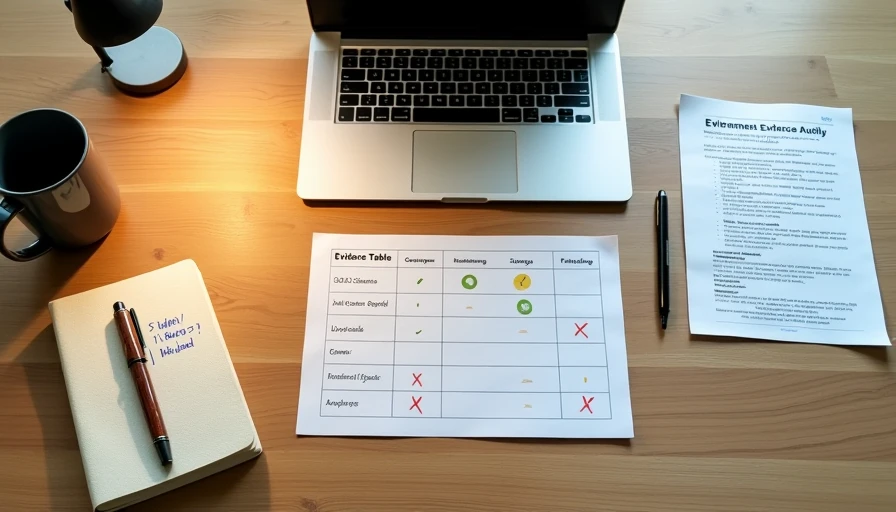
I built this table to compare the AI claim against each official source.
Claim | AI Answer | DOL Source | State Source | FMLA Summary | Finding |
|---|---|---|---|---|---|
FMLA 12 weeks unpaid | Yes | Yes | N/A | Yes | Confirmed |
FMLA 50+ employees | Yes | Yes | N/A | Yes | Confirmed |
No federal paid leave | Yes | Yes | N/A | Not addressed | Confirmed |
State paid leave: 12 weeks | Yes | N/A | Actual: 8 weeks | N/A | Error |
State + FMLA can combine | Yes | N/A | Not addressed | Not addressed | Unresolved |
Column 1: Claim. The exact claim from the AI answer.
Column 2: AI Answer. The AI's position on the claim.
Column 3: DOL Source. What the Department of Labor says.
Column 4: State Source. What the state's labor department says.
Column 5: FMLA Summary. What the FMLA summary says.
Column 6: Finding. My conclusion: confirmed, error, or unresolved.
Evidence
Let me walk through each row.
Row 1: FMLA provides 12 weeks of unpaid leave. Confirmed by three sources. This is the core of the FMLA.
Row 2: FMLA applies to employers with 50+ employees. Confirmed by DOL and the FMLA summary. The AI was correct.
Row 3: No federal paid leave. Confirmed by DOL. The U.S. does not have a federal paid family leave program. Some states do, but not the federal government.
Row 4: State paid leave is 12 weeks. This is where the AI got it wrong. The state's official website says the paid family leave program provides up to 8 weeks of partial wage replacement, not 12. The AI overstated the benefit by 50%.
Row 5: State + FMLA can combine. Both the DOL source and the FMLA summary are silent on this specific interaction. The state source says the programs can be used together but doesn't specify how. I marked this as unresolved.
Finding
Partly correct.
Out of five claims:
Three were confirmed.
One was a clear error (the state leave duration).
One was unresolved (the interaction between state and FMLA).
The AI was not wrong about the federal side. It was wrong about the state side. The specific number mattered for our planning.
Risk
If we had relied on the AI answer, we would have planned for 12 weeks of paid leave in our state. The actual number is 8 weeks. That's a 4-week difference in income and time off. For a family planning leave, that's a material error.
The risk isn't just the number. It's the planning. We might have made budget decisions based on 12 weeks, then discovered the actual benefit was 8. That's the kind of mistake you don't want to discover after the baby arrives.
Lesson
Here's what I learned from building this table.
The table caught one error and one unresolved case. Without the table, I might have skimmed the summary and trusted the number. With the table, I had to check each row against a source.
The "unresolved" column is more useful than I expected. I was tempted to force a yes/no on the interaction between state and FMLA. Marking it unresolved is more honest. It tells me I need to call the state office directly.
The table doesn't scale well. Five claims took me about 30 minutes. A 20-claim document would take two hours. That's too slow for everyday use.
Some columns were more useful than others. Columns 1, 2, and 6 were essential. Columns 3, 4, and 5 depended on which source applied. If I'd had more sources, I would have needed more columns.
The table doesn't capture the reader's situation. The AI overstated the state benefit. But even a correct summary would have needed to know my specific situation (eligibility, employer size, prior earnings) to be truly useful.
What I'm Asking the Community
Can we improve this evidence table?
I think it's missing at least three things.
1. A source reliability column. Some sources are more authoritative than others. DOL is more authoritative than a state blog. Should I rank each source?
2. A jurisdiction column. This case involved federal and state law. But some cases involve multiple states, or international jurisdictions. Should the table have a jurisdiction field?
3. A "needs escalation" column. For unresolved claims, some require a phone call. Some require a lawyer. Some just require another search. Should the table distinguish these?
I'm also wondering whether the table has too many columns. Could I combine Columns 3, 4, and 5 into one "Sources Checked" column? Or is it better to keep them separate?
And one more question: how do you handle sources that are silent on a claim? In Row 5, both the DOL and the FMLA summary didn't address the interaction. That's not a "no." It's a "not addressed." Should I have a specific label for that?
If you've built a similar table, please share it. If you think mine is missing something obvious, tell me. I'd rather fix it now than after another material error in my own family planning.
A Few More Details
I should mention: I've anonymized the state. The specific program matters for my family, but the pattern is general.
I should also mention: I called the state office after building the table. The 8-week number was confirmed. The interaction with FMLA was explained. My table was right, and the AI was wrong.
If you have a better structure, I'd like to see it. This is the second version of my evidence table. It's still evolving.
Comments
No comments yet — be the first to share a thought.