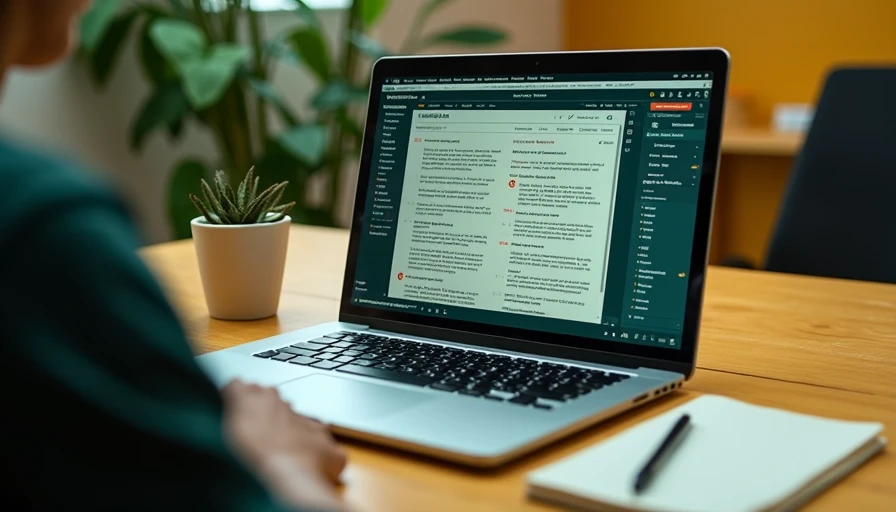
An AI answer can look carefully researched while resting on a broken link, an unrelated article, or a source that never says what the answer claims. A citation checker online gives you a practical starting point for testing those references before you submit a paper, publish a post, recommend a product, or make a business decision. It does not replace judgment. It helps you slow down, isolate each claim, and follow the evidence trail.
What a citation checker online actually checks
A useful citation checker online does more than confirm that a URL opens. It helps answer several separate questions. Does the source exist? Is it the original source or a copied summary? Does the publication date fit the claim? Does the cited passage support the exact wording? Is the source authoritative for this subject? A government agency, university, court document, product manual, or peer-reviewed paper may carry more weight than an anonymous page repeating the same statement.
Start by copying the claim, not just the citation. For example, an AI response might say, “This tax rule applies to every freelance worker in the United States,” and attach a link to an Internal Revenue Service page. The link could be real, yet the claim could still be too broad. The page may discuss one filing situation, an exception, or guidance for a particular tax year. A citation checker online can help locate the relevant passage, but you must compare the passage with the sentence written in the answer.
Look for four outcomes: confirmed, corrected, partly correct, or unresolved. “Unresolved” is a valuable result when the evidence is incomplete. It is more honest than forcing a yes-or-no conclusion because an AI system sounded confident.
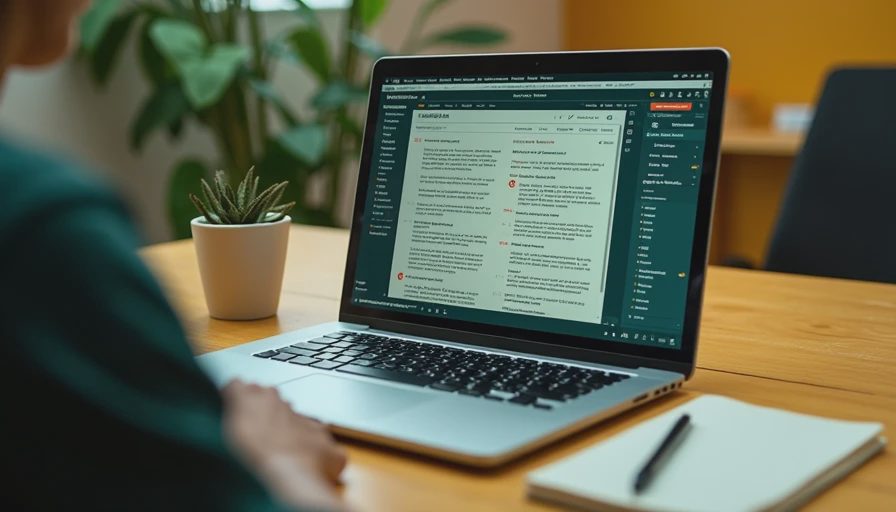
A step-by-step workflow for checking AI citations
First, preserve the original record. Save the prompt, the complete AI response, the model name if available, the date, and every link. AI systems can produce different answers to the same question, and a page can change after you inspect it. A screenshot or copied text gives other reviewers something concrete to examine.
Next, divide the response into individual claims. One sentence may contain three claims about a law, a statistic, and a company policy. Check each part separately. Paste the citation into a citation checker online, then open the source yourself. Read the headline, author, date, and surrounding paragraphs instead of relying on a search-result snippet.
Then compare language carefully. “The study found an association” does not mean “the study proved causation.” “Some users reported an issue” does not mean “the product is unsafe.” Watch for missing qualifiers such as “may,” “in this sample,” “under these conditions,” or “as of 2022.” Those small words can change the meaning of an entire answer.
Finally, write a short correction. State what the source supports, what it does not support, and what wording would be safer. If the source is inaccessible, contradictory, or too vague, mark the claim unresolved and explain what evidence would settle it.
Common citation failures to spot
A citation checker online is especially useful for recurring failure patterns. The first is the nonexistent source: a polished-looking title, author, journal, or URL that cannot be found anywhere. The second is the wrong-source problem, where a real page discusses a neighboring topic but not the claim attached to it. The third is citation drift. An answer begins with a narrow, accurate finding and gradually turns it into a broad recommendation as the text continues.
Another issue is outdated evidence. A 2018 software manual may not describe a current interface, and an old policy page may have been replaced. Date-sensitive questions require a date-sensitive review. Also check whether a cited source is primary. A news story about a court decision can be useful, but the court opinion is stronger evidence for the ruling itself. A retailer’s product page can describe specifications, but it is not independent proof of performance.
Pay attention to quantity, too. Five links do not automatically make an answer well supported. If all five repeat one unsourced claim, they create the appearance of research without adding independent evidence. A good audit asks what each source contributes.

Choosing tools and protecting private information
Different tools serve different jobs. A citation checker online may focus on broken links, source details, academic formatting, or matching references to passages. A search engine can help locate the original document. A library database may provide stronger access to journals and books. A browser’s find function can quickly locate names, dates, and phrases inside a long report. For legal, medical, financial, or safety-related questions, use the relevant official source whenever possible.
Do not paste confidential material into a public tool. Remove names, account numbers, private client details, unpublished research, and internal company text before checking. Keep a private copy of the full record if your work requires it, but share only the minimum evidence needed for discussion. This protects the people represented in the prompt and makes a public audit more responsible.
Tool output also needs review. A checker can identify a broken URL, but it cannot always determine whether a source truly supports a nuanced claim. Automated similarity or relevance scores are clues, not proof. The most reliable process combines software assistance with a human reading the source in context.
Build an audit card others can understand
A simple audit card turns a one-time correction into a reusable lesson. Include the original prompt, model and date, exact claim, citation supplied, source checked, relevant passage, finding, risk, correction, and prevention step. A citation checker online can support the source and link fields, while the reviewer explains the reasoning in plain English.
Imagine an answer recommending a medication and citing a general health article. The audit might find that the article discusses adults, while the answer applies the advice to children. The finding would be partly correct, the risk potentially serious, and the correction a recommendation to consult age-specific guidance from a qualified professional. The prevention lesson could be simple: require age, dosage, and source-date checks before repeating health advice.
Use neutral language in the record. “The answer overgeneralized the source” is more useful than “the model is stupid.” The goal is to identify what failed and how another reader can catch it earlier. Clear records also make unresolved cases easier for librarians, teachers, editors, and other community members to review.
What to do after the check
If the claim is confirmed, preserve the source and note its date. If it is corrected, rewrite the answer rather than merely adding another link. If it is partly correct, narrow the wording and include the relevant limitation. If it remains unresolved, say so plainly and avoid presenting speculation as fact.
A citation checker online is most valuable when it becomes part of a repeatable habit. Before trusting an AI answer, ask: What exactly are we checking? What is the source, and does it support the claim? What could happen if someone believes the answer? Those questions turn verification from a vague feeling into a concrete process.
Bring difficult cases to Claim Check Room with the original prompt, response, evidence, and your current finding. Others can test the source, challenge the interpretation, and improve the correction. The aim is not to treat every AI answer as worthless or every citation as reliable. It is to build a calm, searchable record of what held up, what failed, and what would have caught the problem sooner.
Comments
No comments yet — be the first to share a thought.