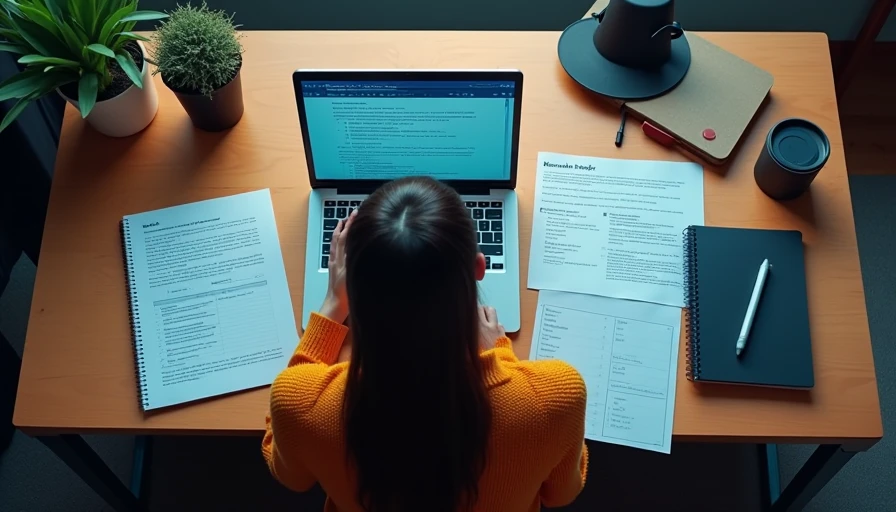
AI hallucination examples are easier to find once you stop treating a polished response as proof. A generative AI tool can produce a fluent paragraph, realistic citation, or confident explanation while quietly inventing facts. The useful question is not whether AI is good or bad. It is what exactly are we checking, what evidence supports the answer, and what could happen if someone trusts it?
At Claim Check Room, an AI response is a draft that needs an audit. That approach avoids two common mistakes: accepting every answer because it sounds professional, or dismissing an entire model because it made one error. A careful review separates confirmed information, incorrect claims, missing context, and questions that remain unresolved.
What counts as an AI hallucination?
An AI hallucination is an answer that presents false, fabricated, or unsupported information as though it were reliable. The mistake can be small, such as giving the wrong publication date for a book. It can also be serious, such as inventing a legal case, medical source, product safety detail, or financial figure.
One of the clearest AI hallucination examples is a nonexistent citation. Ask a chatbot to recommend sources about a specialized topic, and it might provide an author, journal title, article name, volume number, and link that look entirely plausible. When you search the journal database, however, the article is nowhere to be found. The formatting was real-looking, but the source was not real.
Other failures include misquoting a living author, attributing a statement to the wrong person, combining facts from two different events, and describing a feature that a software product does not offer. A response can also hallucinate by answering an ambiguous question without acknowledging the ambiguity.

Common AI hallucination examples in everyday work
Consider a small-business owner asking an AI tool to summarize a contract. The response may correctly identify the payment schedule but add a cancellation penalty that appears nowhere in the document. That is not a minor writing flaw. It could change a negotiation or lead someone to sign without understanding the actual terms.
A student might request a list of peer-reviewed studies and receive several convincing-looking titles. The student then quotes those sources in a paper, only to discover that the authors, page numbers, or conclusions were invented. This is one reason a bibliography should be checked in a library catalog, publisher database, or the original journal rather than copied directly from a chatbot.
A professional researching regulations can encounter a different problem. The model may merge an old rule with a current rule, confuse federal guidance with a state requirement, or state that a deadline applies universally. The wording sounds decisive, but the answer lacks a verified source and a clear date. In compliance work, that missing context can matter more than the sentence itself.
A parent asking about a medication, a freelancer preparing an invoice, or a researcher checking a historical date can face the same pattern. The subject changes, but the failure remains: unsupported details are delivered with more confidence than the evidence deserves.
Why do chatbots make these mistakes?
Generative AI systems produce likely sequences of words. They are designed to create a useful response, not to guarantee that every statement is true. If the prompt asks for a definite answer and the system lacks dependable information, it can fill the gap with a plausible continuation.
Training data also contains errors, contradictions, outdated pages, and incomplete descriptions. A model may recognize familiar patterns without knowing which source is authoritative. Retrieval tools can help, but they do not automatically solve the problem. A search result may be misread, a webpage may be stale, or the system may cite a source that does not support the exact claim.
Prompt wording influences the result too. “Give me five definitive reasons” encourages certainty, while “identify what is known, uncertain, and worth verifying” creates room for a more honest answer. Asking an AI tool to show its sources is useful, but a list of sources is only a starting point. The source must actually exist and support the claim.
A practical method for checking an AI answer
Start by preserving the original prompt, model name, date, and complete response. Do not rely on memory or a shortened screenshot. Next, break the answer into individual claims. A paragraph that looks like one conclusion may contain five separate factual statements.
For each claim, ask what is the source, and does it actually support the claim? Search distinctive phrases in quotation marks, open the original document, and compare the wording. For a date, name, price, or number, use at least one authoritative source and look for a second independent confirmation when the decision is important.
Then classify the result as confirmed, corrected, partly correct, or unresolved. “Partly correct” is often more useful than simply calling an answer false. For example, an AI tool may identify the right federal agency but provide an outdated deadline. Record both the accurate part and the correction.
Finally, assess the risk. A wrong movie recommendation is inconvenient. A fabricated medical explanation, tax instruction, employment rule, or safety claim deserves a much higher verification standard. Remove private information from prompts and documents before sharing a case publicly.
Turning AI hallucination examples into better habits
The most useful AI hallucination examples do more than expose a mistake. They show what would have caught it earlier. A missing citation could have been detected by opening the journal page. A contract error could have been caught by comparing every claimed obligation with the uploaded text. An incorrect regulation could have been flagged by checking the agency website and publication date.
A simple audit card makes this process repeatable. Record the prompt, model, date, output, claim under review, evidence, error type, potential harm, correction, and prevention lesson. This structure turns an embarrassing surprise into a searchable learning record. It also helps other users recognize similar warning signs without repeating the same investigation.
Watch for unusually precise details, excessive confidence, links that redirect or fail, quotes without page references, and answers that never distinguish fact from inference. Be especially cautious when a response conveniently confirms what you hoped was true. Agreement is not evidence.
How to use AI without outsourcing judgment
AI can still be valuable for brainstorming, organizing notes, translating rough ideas, generating questions, and explaining a difficult concept in simpler language. The safest workflow assigns it a drafting role and reserves final judgment for a human who checks the important claims.
When the stakes are low, a quick source check may be enough. When the stakes involve health, money, legal rights, safety, grades, or a public statement, inspect the primary evidence and consult a qualified professional when appropriate. Do not paste confidential client records, student information, passwords, or proprietary documents into a tool merely to obtain a faster answer.
The goal of studying AI hallucination examples is not to shame users or declare every model useless. It is to build the habit of slowing down at the exact point where fluent language creates false confidence. Bring the original question, response, and evidence trail to Claim Check Room, and help establish whether the claim is confirmed, corrected, partly correct, or still unresolved.
Comments
No comments yet — be the first to share a thought.